






Last Updated on March 28, 2026 4:15 pm
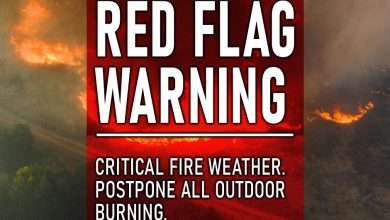
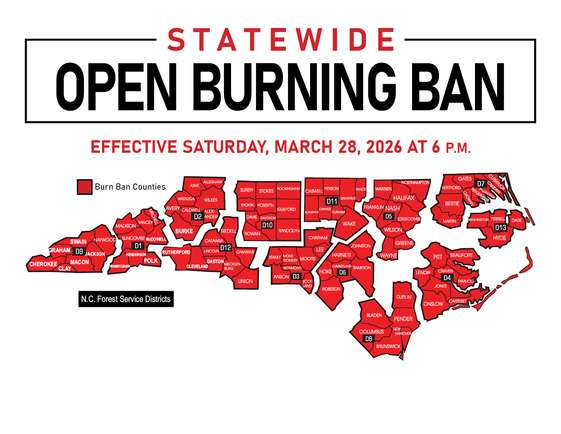
RALEIGH – Due to increased wildfire risk, the N.C. Forest Service has issued a ban on all open burning and has canceled all burning permits statewide effective 6 p.m. Saturday, March 28 until further notice.
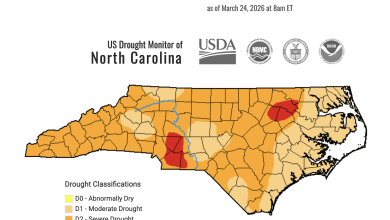
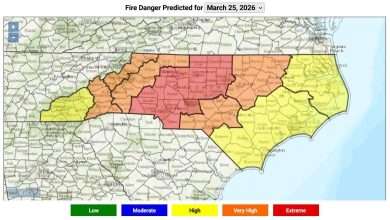
“With drought severity across the state, forecast fire weather and the potential for limited rainfall, it is critical to reduce the number of new fire starts,” said Agriculture Commissioner Steve Troxler. “Vegetative fuels will dry rapidly, and with the amount of fuel loading in the mountains and drought impacts statewide, a burn ban for all 100 counties is necessary to reduce the number of wildfires across our landscape. Please follow this burn ban to help reduce the risk for everyone.”
Under North Carolina law, the ban prohibits all open burning statewide, regardless of whether a permit was previously issued. The issuance of any new permits has also been suspended until the ban is lifted. Anyone violating the burn ban faces a $100 fine plus $183 court costs. Any person responsible for setting a fire may be liable for any expenses related to extinguishing the fire.
The burn ban does not apply to fires started within 100 feet of an occupied dwelling. The local fire marshal has authority to issue a burn ban within those 100 feet.
Local fire departments and law enforcement officers are assisting the N.C. Forest Service in enforcing the burn ban.
The N.C. Forest Service will continue to monitor conditions. Residents with questions regarding a specific county can contact their N.C. Forest Service county ranger or their county fire marshal’s office.
Answers to FAQ
Q: What is open burning?
A: Open burning includes burning leaves, branches or other plant material. In all cases, burning trash, lumber, tires, newspapers, plastics or other nonvegetative material is illegal.
Q: May I still use my grill or barbecue?
A: Yes, if no other local ordinances prohibit their use.
Q: Can I still use my fire pit or fireplace outdoors?
A: More than 100 feet from an occupied dwelling, fire pits, outdoor fireplaces, and burning barrels are considered open burning and are subject to the burn ban. Within 100 feet of an occupied dwelling, local government agencies have jurisdiction over open burning. All local outdoor burning bans are set independently. The N.C. Forest Service has advised county fire marshals of this ban, and they have been asked to also consider implementing a burn ban. Check with county fire marshals about local restrictions.
Q: Can I have a campfire when I go camping?
A: Campfires would be considered open burning and are not exempt from the burn ban. During a burn ban, portable gas stoves or grills are alternate methods for cooking food while camping.
Q: Can I use fireworks during a burn ban?
A: Fireworks and other pyrotechnic devices are prohibited during a burn ban and are not allowed in any county while the burn ban is in effect.
Q: How should I report a wildfire?
A: Call 911 to report a wildfire.
Q: How should I report a person who intentionally starts a wildfire?
A: Call 911 to report a wildfire.
Q: My local fire marshal has also issued a burn ban for my county. What does this mean?
A: The burn ban issued by the N.C. Forest service does not apply to a fire within 100 feet of an occupied dwelling. Local government agencies have jurisdiction over open burning within 100 feet of an occupied dwelling. The N.C. Forest Service has advised county fire marshals of the burning ban and has asked for their consideration of also implementing a burning ban. If a fire within a 100-foot area of a dwelling escapes containment, a North Carolina forest ranger may take reasonable steps to extinguish or control it. The person responsible for setting the fire may be liable for any expenses related to extinguishing the fire.
Q: Are there other instances which impact open burning?
A: Local ordinances and air quality regulations may impact open burning. For instance, outdoor burning is prohibited in areas covered by Code Orange or Code Red air quality forecasts. Learn more about air quality forecasts on the N.C. Department of Environmental Quality’s website.
Q: What can I do to protect my house against the risk of wildfire?
A: Learn about wildfire risk assessments, preparedness and prevention plans on the following N.C. Forest Service webpages: Wildland Urban Interface and Resist Wildfire.