






Last Updated on November 5, 2025 5:30 pm
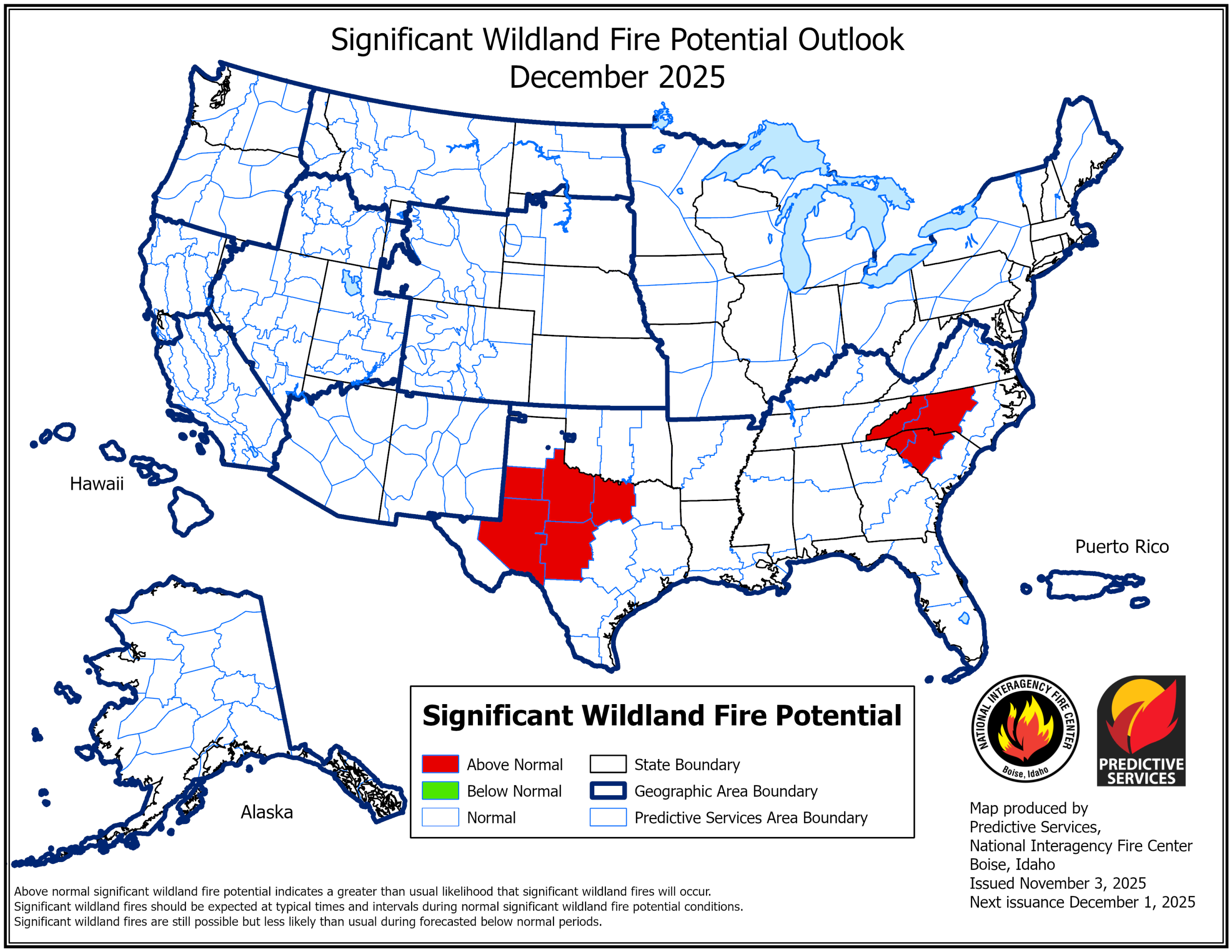
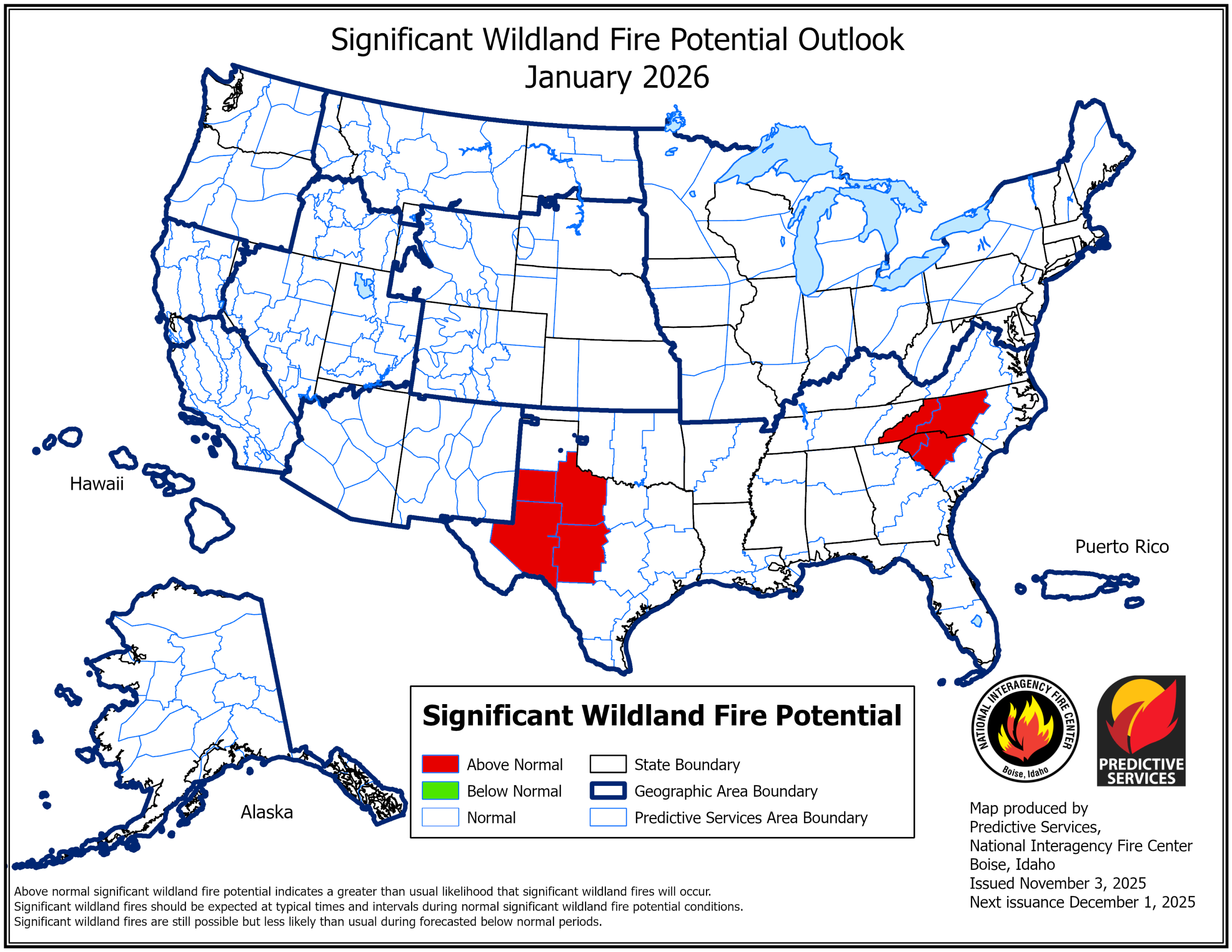
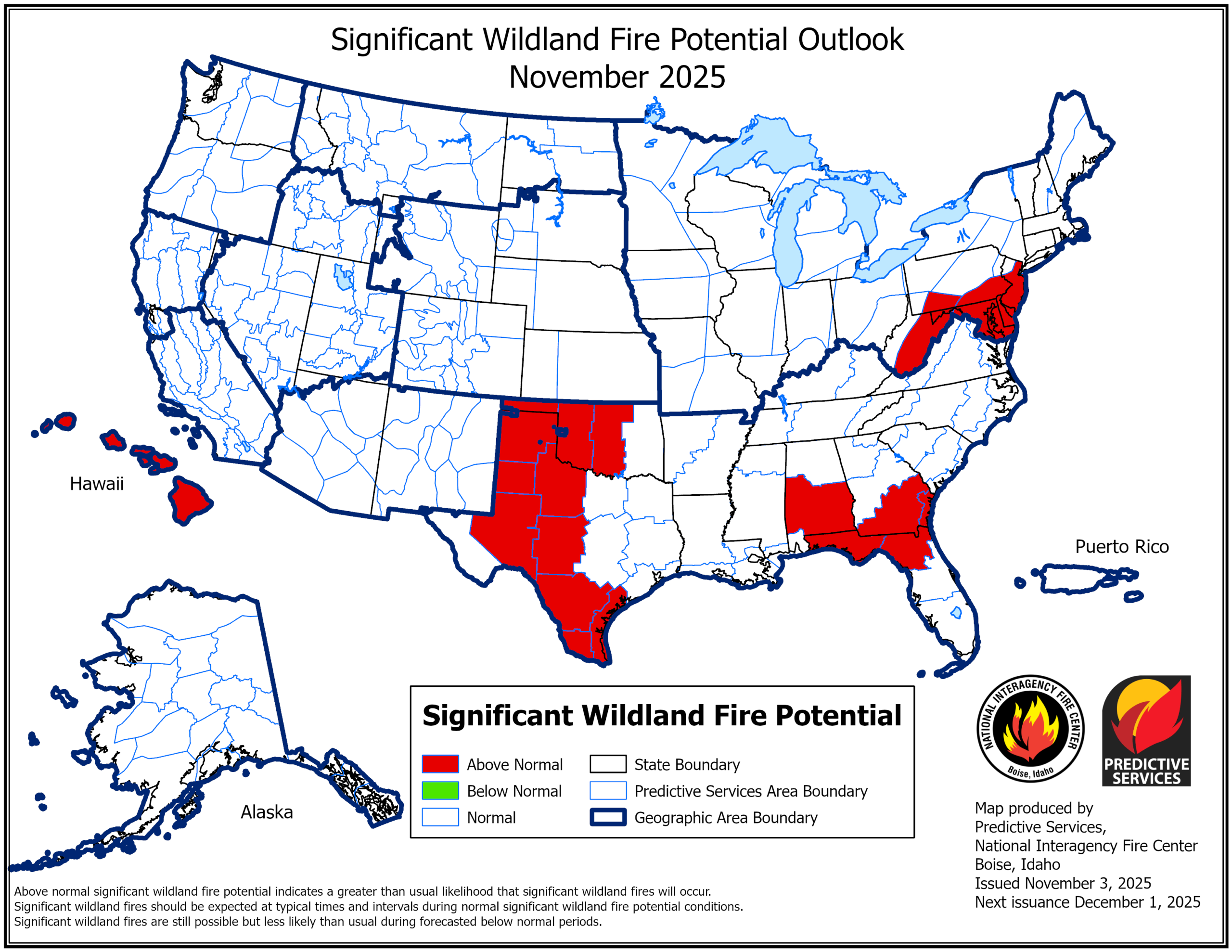
The National Interagency Fire Center outlook for the Southern Area of the United States released November 1, 2025:
Regional fire forecasters warn of above-normal wildfire danger across much of the South from November through February, driven by abnormally high grass loads and fuel accumulation from Hurricane Helene damage.
Despite soaking rains in late October, the Southern Area faces an active fire season ahead as La Niña conditions take hold and dormant season grass fuels reach their highest levels since 2021-2022.
Temporary Relief in the Appalachians
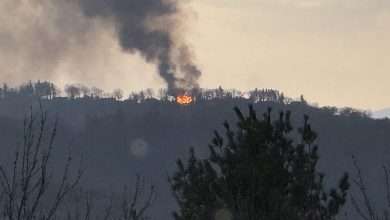
The Appalachian region, including areas devastated by Hurricane Helene, received significant rainfall at the end of October that will provide short-term relief from fire danger. Cool temperatures and persistent moisture early in November are expected to keep fire conditions relatively calm in the mountains.
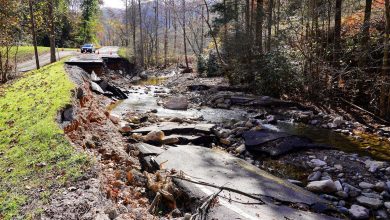
However, forecasters caution this reprieve may be temporary. Heavy dead fuels in Helene's footprint will require several weeks of dry weather to become fire-receptive, and conditions could deteriorate rapidly later in the season.
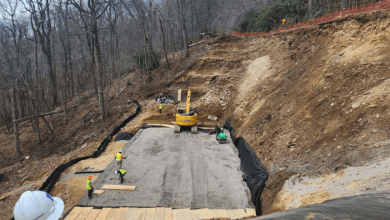
“Given the major concerns around Helene fuels and firefighting in the hurricane's wake,” fire managers have designated normal significant fire potential for the region during November, with elevated risk returning December through February across the western Carolinas.
Southern Plains Face Critical Grass Fuel Loading
The most significant concern spans Oklahoma and Texas, where an abnormally wet growing season produced grass loads not seen since the 2021-2022 dormant season. These high fuel loads are already cured and fire-receptive across large portions of both states following late summer and fall drought.
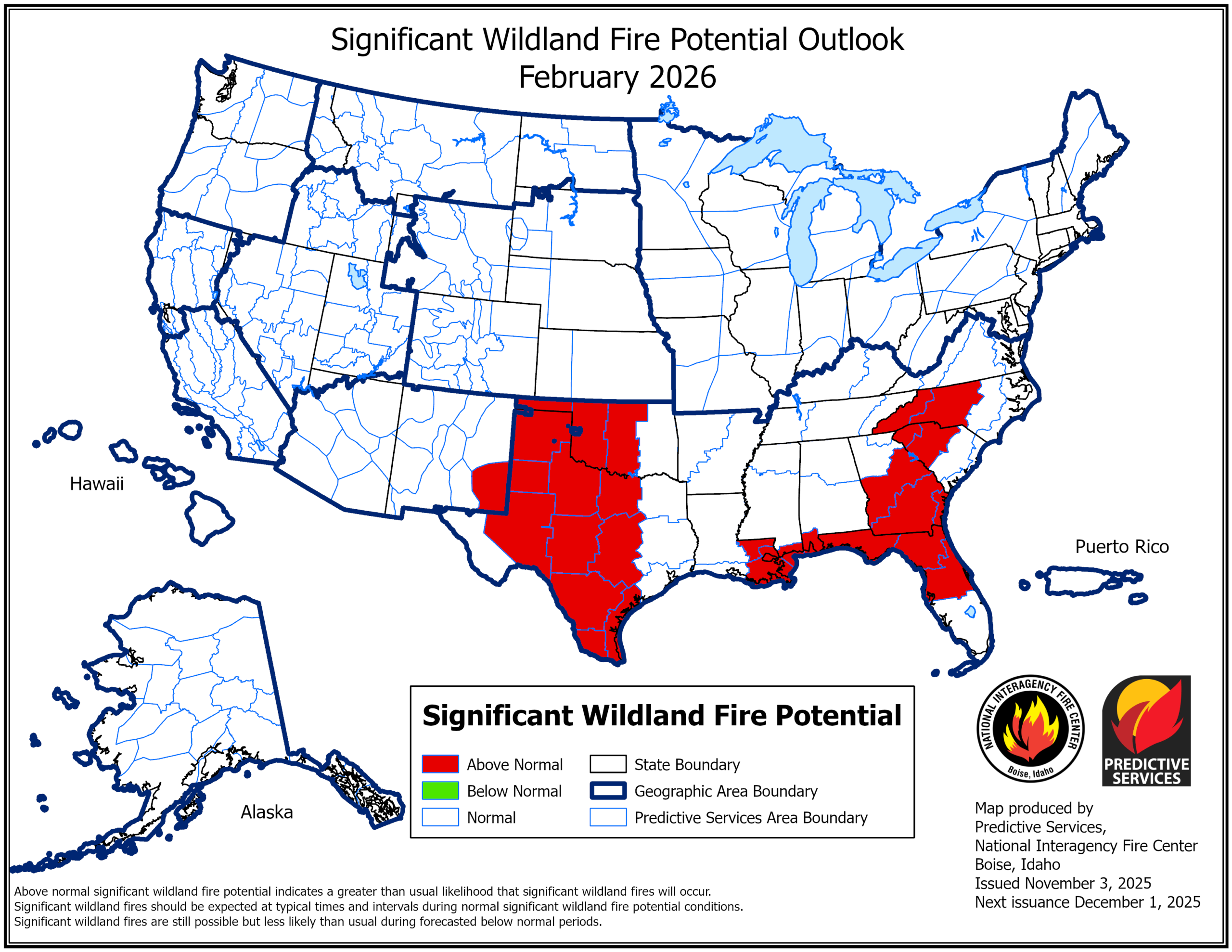
Above-normal wildfire risk is forecast for much of Oklahoma and Texas beginning in November and continuing through winter. By February, as spring weather patterns emerge and high-wind events become more frequent, most of both states will face elevated fire danger.
Recent killing freezes in western Oklahoma and northwestern Texas have halted cool-season grass growth, though areas that received late October rainfall may see temporary greening that could buffer against fire spread until colder temperatures arrive in late November or December.
La Niña Pattern Brings Increased Winter Fire Risk
La Niña conditions developing across the tropical Pacific are expected to drive warmer and drier weather across the southern tier states and East Coast as 2025 transitions to 2026. This climate pattern typically brings extended dry periods punctuated by periodic windstorms—a dangerous combination for wildfire activity.
The lack of tropical storm activity since June has left Gulf waters at record-warm temperatures for this time of year, which could produce prolific rainfall from frontal systems tapping into Gulf moisture. However, the same pattern may create more humid conditions than normal across central and eastern portions of the region when southerly flow returns by mid-November.
Coastal Southeast Drought Concerns
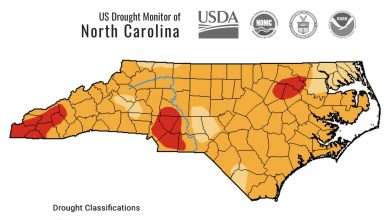
Portions of the coastal Southeast that missed recent rainfall events face expanding severe to extreme drought conditions. Southern Alabama, Georgia, and northern Florida showed limited October rainfall and worsening drought, leading forecasters to designate above-normal fire potential for November in these areas.
Beetle kill and hurricane damage have increased fuel loads across the coastal Southeast. Following typical large fire climatology patterns, above-normal fire potential is expected to spread from Louisiana to Florida and northward through Helene-impacted areas by February.
Unless tropical activity affects Florida in November—still possible in this back-loaded hurricane season—nearly the entire state could see an early onset of fire season this winter.
Prescribed Burning Challenges Ahead
Fire managers warn that prescribed burning operations this winter will face significant challenges. Arkansas, Tennessee, and Kentucky are likely to remain too wet for most prescribed fire operations, while drought conditions may impede burning activities along the Gulf Coast and Southeast Coast by early 2026.
The combination of heavy fuel loading from Hurricane Helene, record grass accumulation in the Plains, and developing La Niña conditions sets the stage for an active wildfire season across the Southern Area through late winter and into spring 2026.