






Last Updated on March 3, 2026 9:42 am
BOONE, N.C. — Firefighters face enough uncertainty during a blaze without having to question the performance reliability of their turnout gear, or personal protective equipment (PPE). To ensure next-generation PPE meets rigorous safety and performance standards, Appalachian State University researcher Dr. Caroline Smith is putting both gear and firefighters in the hot seat — in the field and in specially designed lab spaces at the Beaver College of Health Sciences.
Smith serves as a co-principal investigator on the research project, which is led by PI Dr. R. Bryan Ormond, associate professor in the Wilson College of Textiles at North Carolina State University and director of the college’s Milliken Textile Protection and Comfort Center. The project was recently funded with $1.5 million from the Federal Emergency Management Agency’s Fire Prevention and Safety Grant Program.
Their respective research teams are investigating how human physiology responds to the gear’s newly engineered moisture barriers, which are designed to reduce the amount of harmful liquids and bloodborne pathogens that come in contact with firefighters’ skin. The new barriers, introduced last year, are free of polytetrafluoroethylene — a “forever chemical” that persists in the environment, accumulates in the body and has been linked to higher cancer rates among firefighters.
Some gear manufacturers have already incorporated the changes to comply with new National Fire Protection Association standards and state-level bans on forever chemicals (or per- and polyfluoroalkyl substances), which affects millions of firefighters. However, limited real-world data exists on how the new layers release moisture and heat and affect the body’s ability to cool itself in extreme fireground conditions, according to Smith.
“With changes to the moisture barrier potentially altering the thermal management, firefighters may potentially be under more thermal and cardiovascular strain. In short, if they are hotter, their hearts end up working harder,” explained Smith, a professor in the Department of Kinesiology. “So if these guys get hotter and they’re under strain, that’s a problem and they need to be aware of that.”
With cardiac events responsible for 45% of firefighter fatalities each year, according to the Centers for Disease Control and Prevention, it is critical to evaluate whether the gear reduces evaporative cooling and raises core body temperature, heart rate and dehydration — factors that significantly increase firefighters’ risk of heat stroke and cardiac events.
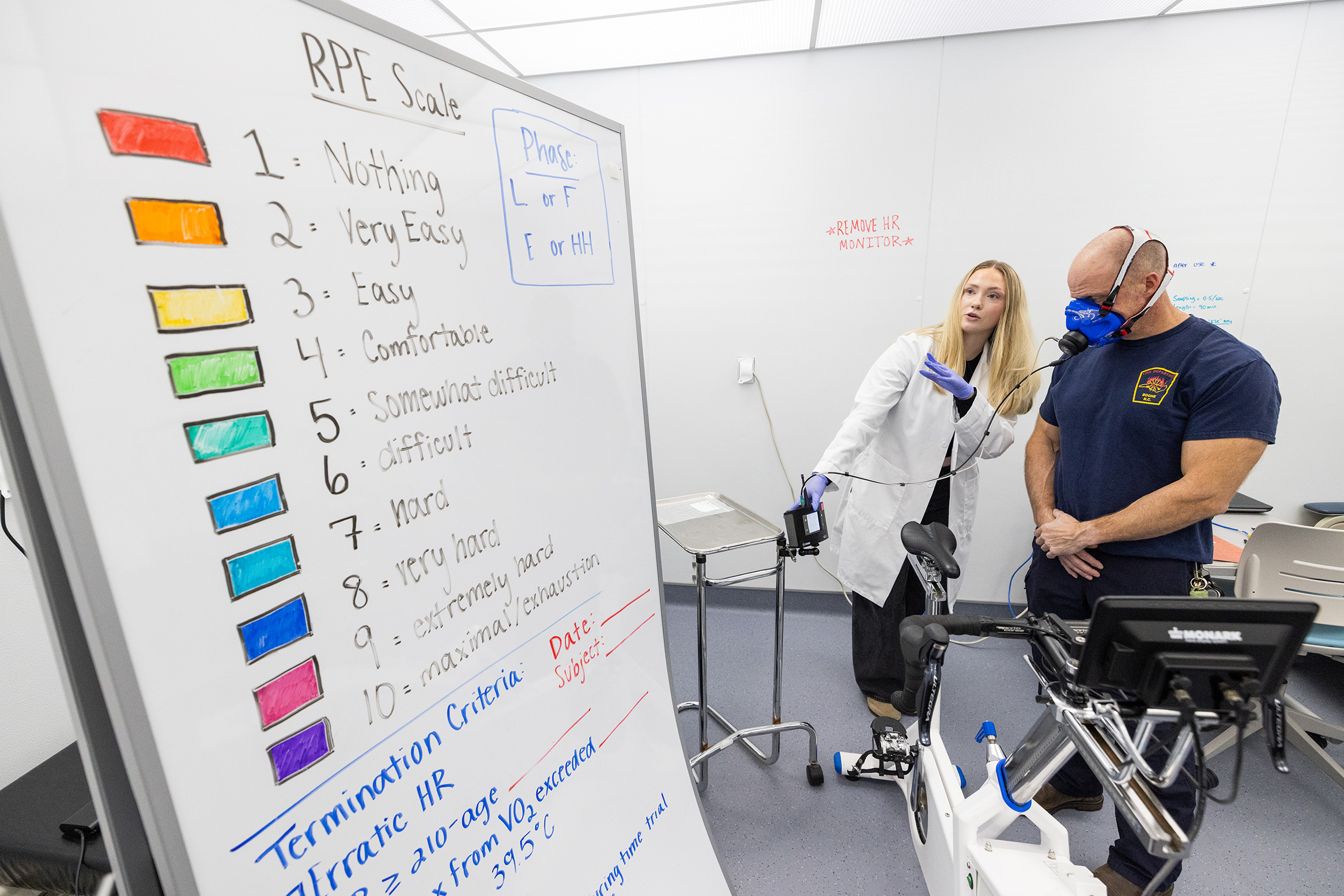
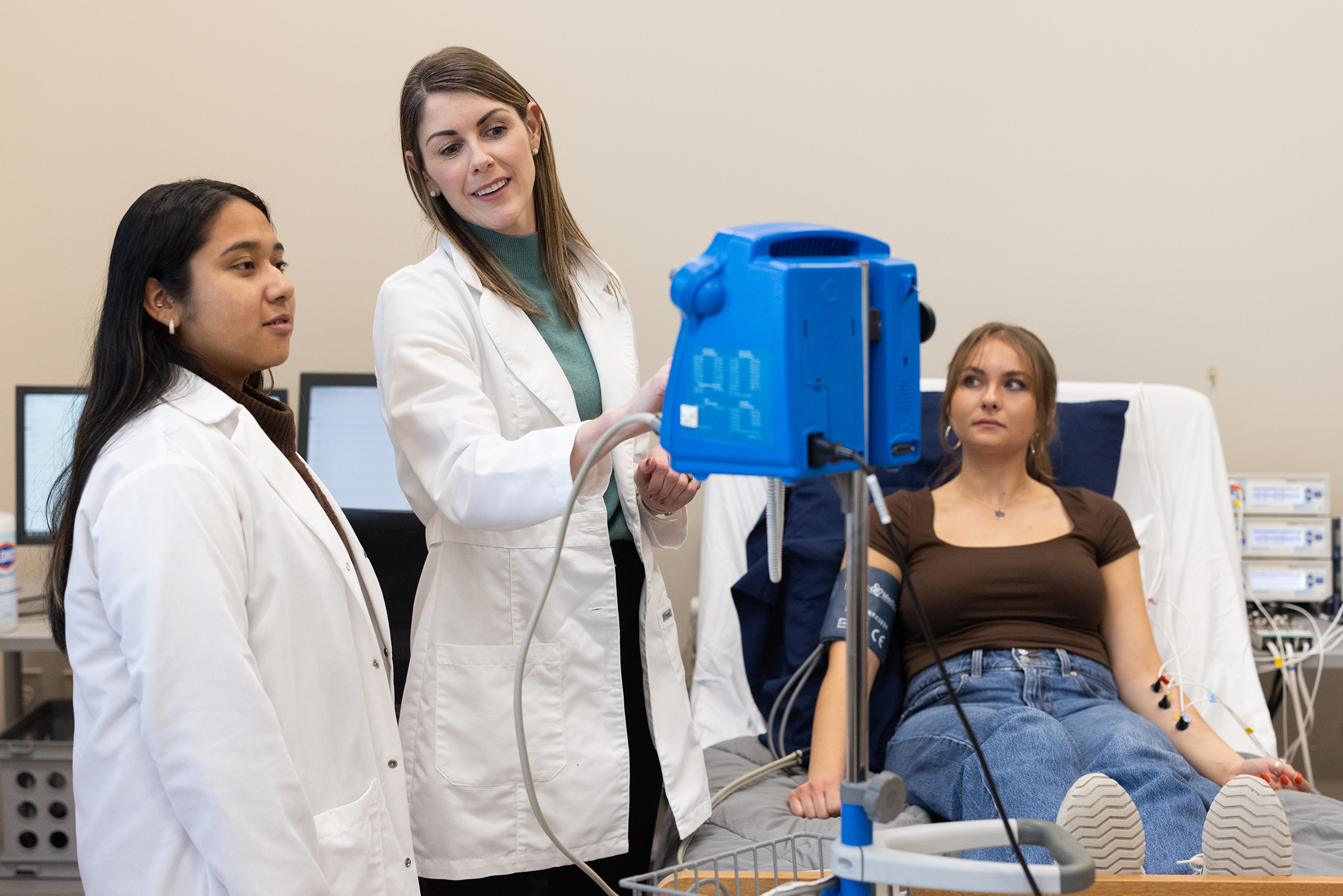
Over several months, six firefighters from Boone and 12 from the Raleigh area will serve as volunteer test subjects, assisting researchers with the evaluation of different moisture barrier designs provided by multiple gear manufacturers.
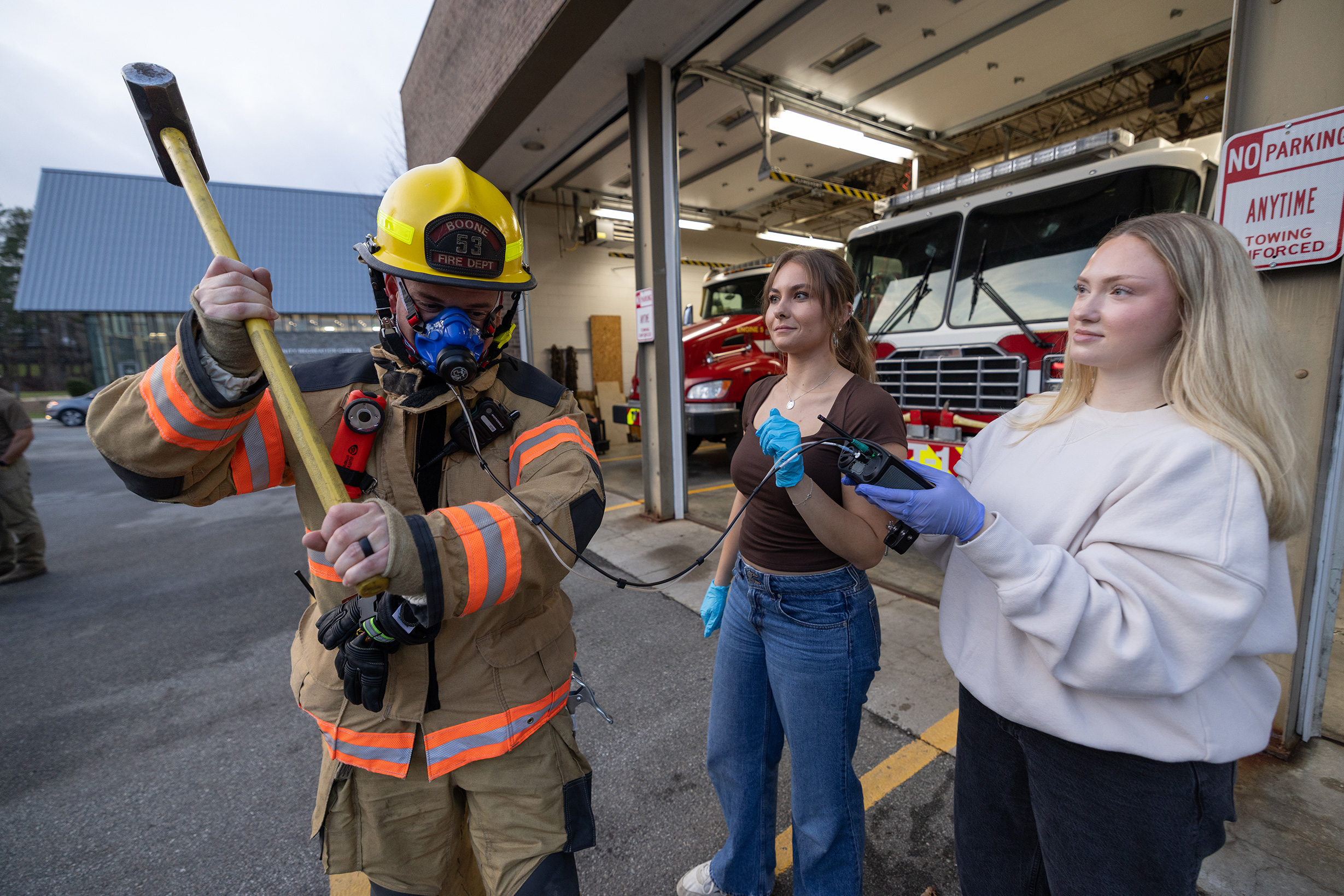
The rigorous series of tests are set to take place in both field settings and an environmental chamber at the Beaver College of Health Sciences’ Environmental and Occupational Physiology Laboratory, where temperatures can reach 105 degrees. These environments are ideal for testing heat stress, Smith said. She will conduct the initial phase of testing in the field, at local fire halls, where firefighters will be monitored while performing physical tasks such as swinging hammers, dragging hoses and climbing to assess their physiological responses to working intensively in the new gear.
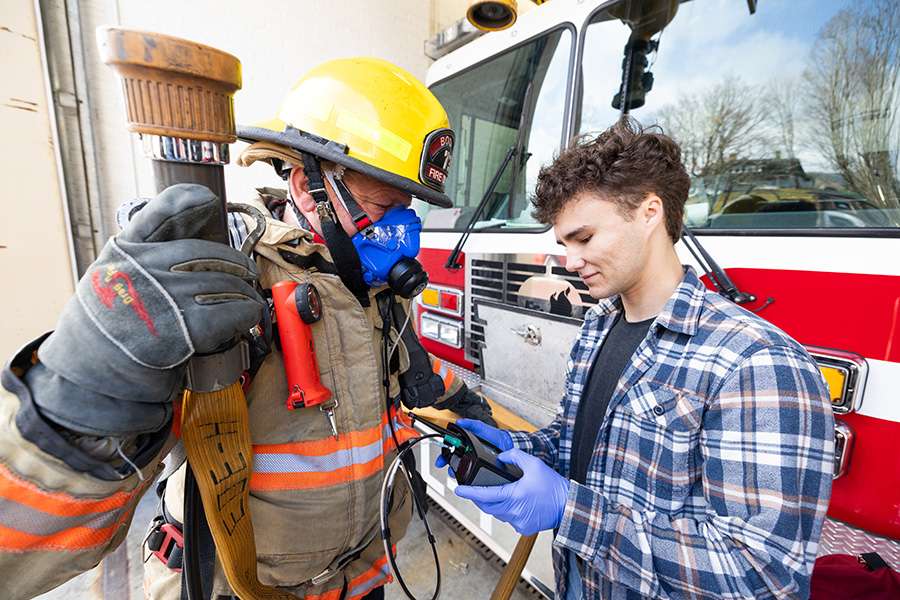
As part of the tests, firefighters swallow telemetry pills — ingestible sensors that use radio technology to transmit core body temperature in real time. Smith and a team of student researchers also measure the firefighters’ heart rate, skin temperature, sweat loss and gas exchange (oxygen use and carbon dioxide production) to calculate their metabolic rate (how hard they’re working). Additionally, the team is examining the impact of heat on cognitive functioning.
“If you get very hot and if you’re at risk of heat illness, your cognitive function can change, and that can be dangerous if your decision-making changes in an emergency situation,” Smith said.
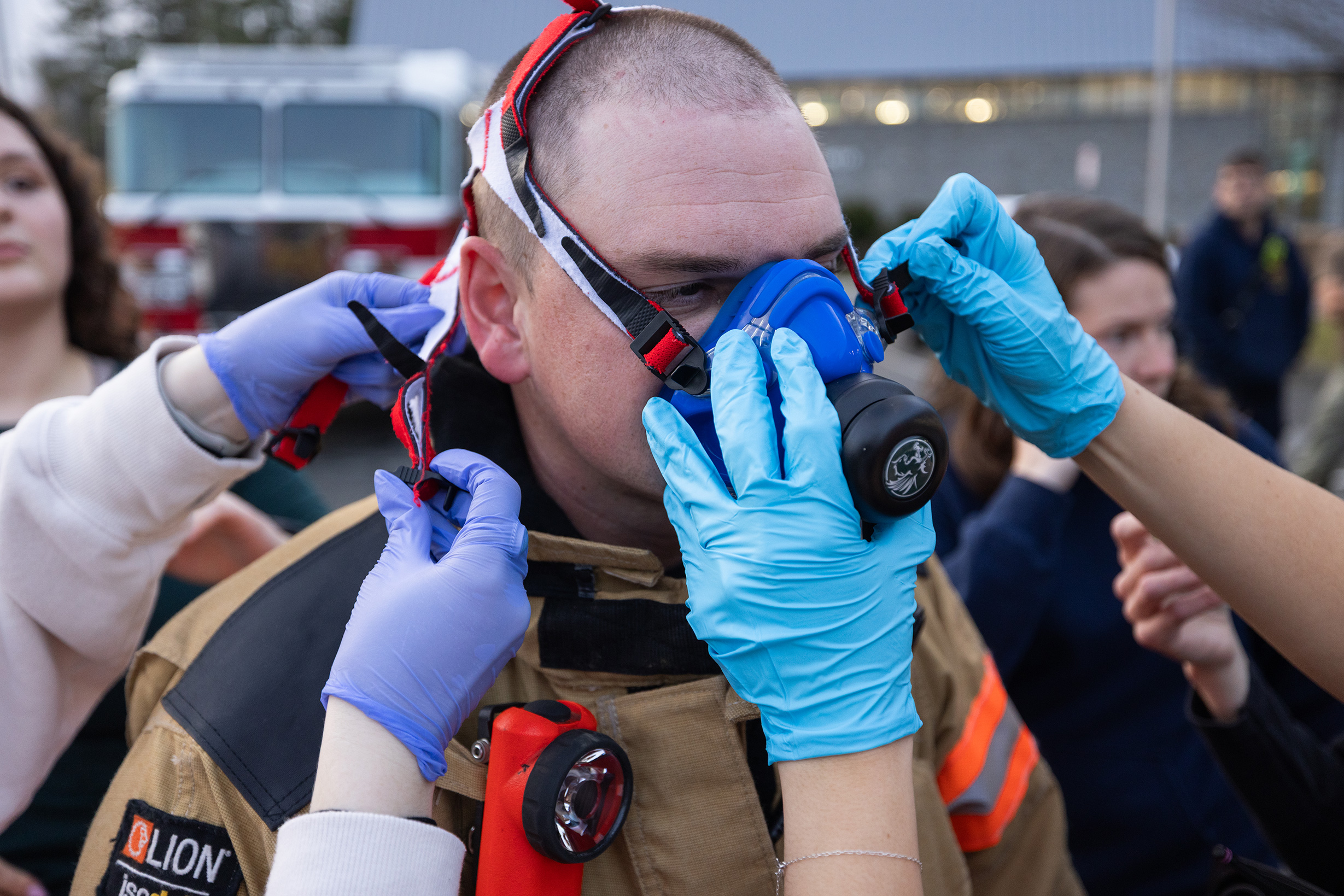
The initiative, including work at NC State, is an interdisciplinary effort that draws on physiology, chemistry, textile expertise, cognitive expertise and biostatistics, Smith explained. Her student researchers will assist with subject recruitment, testing and data analysis. They will also help produce educational material on gear capabilities, limitations and potential health considerations.
The App State–NC State research team includes Smith, Ormond, co-PI Dr. Emily Griffith, professor of the practice in NC State’s Department of Statistics, and investigator Dr. Samantha DuBois, assistant professor in App State’s Department of Kinesiology.
“By quantifying physiological impacts, this project will provide data-driven guidelines for turnout gear selection, ensuring alternatives do not increase cardiovascular and thermal strain beyond acceptable limits,” Ormond explained. “It is imperative that an unbiased and scientifically driven assessment of these new materials be completed as expeditiously as possible to ensure that firefighters are aware of any critical differences, educated on their impacts and acclimated to how their new gear performs and feels prior to wearing it in an emergency response.”
Smith’s broader research examines carcinogen exposure routes, including dermal absorption, particularly in occupational settings. In the lab and in the field with firefighters, Smith’s work has involved placing catheters under the skin to measure the amount of chemicals entering the body. Her novel approaches to understanding contaminant exposure, including intradermal microdialysis, help shed light on the magnitude and time course of exposure through the skin. By pairing this with laser Doppler flowmetry, she can assess the acute effects of these contaminants on skin blood flow and thermoregulation (the body’s internal process for maintaining a safe temperature). Understanding how much and where contaminants are absorbed may help inform decontamination procedures, Smith said, emphasizing that the overall goal for this project is to improve firefighter health and safety.