







Last Updated on July 9, 2026 5:34 pm
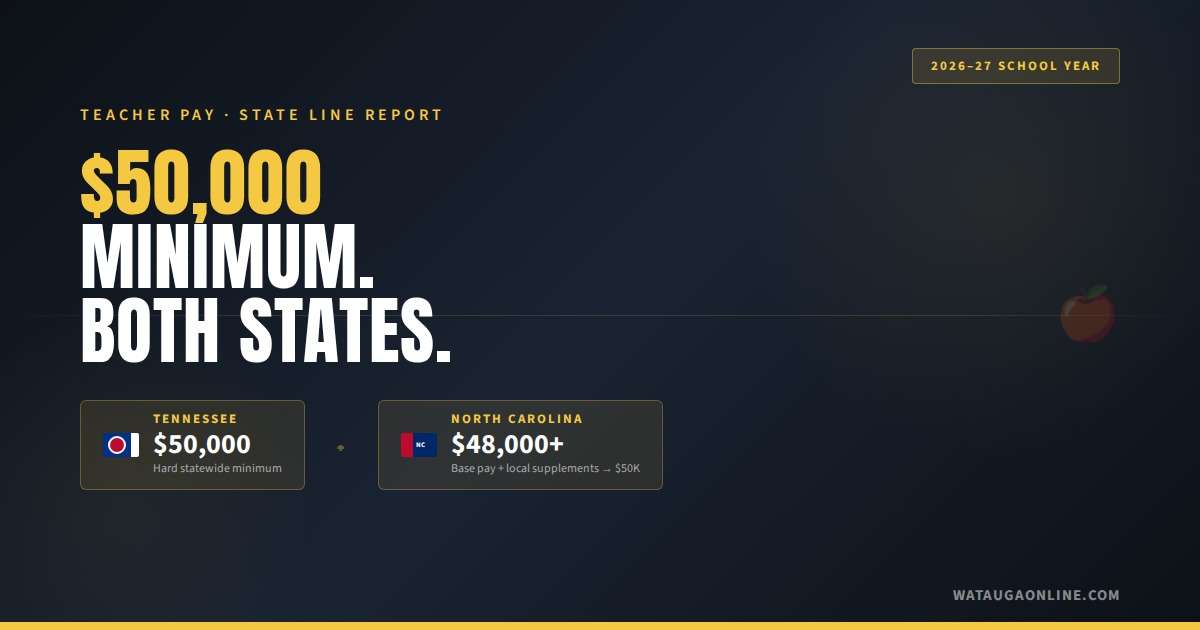
Teachers across Tennessee — including those in Johnson County, which borders Watauga County to the north — will see a larger paycheck this fall as a new statewide minimum salary of $50,000 takes effect for the upcoming school year. Meanwhile, North Carolina just passed its own state budget with significant teacher pay increases, putting the two neighboring states at nearly the same starting point heading into the 2026-27 school year.
Tennessee's pay floor is the result of the Teacher Paycheck Protection Act, signed into law by Governor Bill Lee in 2023. The legislation set a phased schedule of minimum salary increases, raising the floor from $35,000 in 2019 to $44,500 in 2023, $47,000 in 2025, and now $50,000 for the 2026-27 school year — a 42 percent increase over eight years.
School leaders across Tennessee say the increase is designed to help recruit and retain educators, particularly in rural counties where filling classroom vacancies has been a persistent challenge. The financial impact varies by district. In Unicoi County, the increase added more than $500,000 to the district's budget, with the state covering roughly half and the county responsible for the rest. Some districts were already ahead of the curve — Greeneville City Schools had brought its starting salary close to $50,000 a year early.
The $50,000 minimum is above the national average teacher salary, which sits at approximately $46,500.
On the North Carolina side of the border, the General Assembly passed a budget on July 2 that includes an average 8 percent raise for teachers, bringing the state's base starting salary to $48,000 for the 2026-27 school year — up from $41,000. State Sen. Michael Lee noted that when local and state salary supplements are factored in, no teacher in North Carolina will earn less than $50,000 — effectively matching Tennessee's new floor, though North Carolina's number includes local supplements that vary by county rather than a hard statewide minimum.
For High Country teachers, the raises on both sides of the state line mark a meaningful shift after years of stagnant pay. North Carolina ranked 43rd nationally for average teacher salary as recently as 2024, and a Reason Foundation analysis found that teacher salaries in the state dropped more than 20 percent in real terms from 2002 to 2022 when adjusted for inflation. Tennessee, despite its new minimum, still ranked 44th nationally for average teacher pay as of 2024 according to a National Education Association report.
Both states' raises take effect with the start of the 2026-27 school year this fall.