







Last Updated on July 10, 2026 2:03 pm
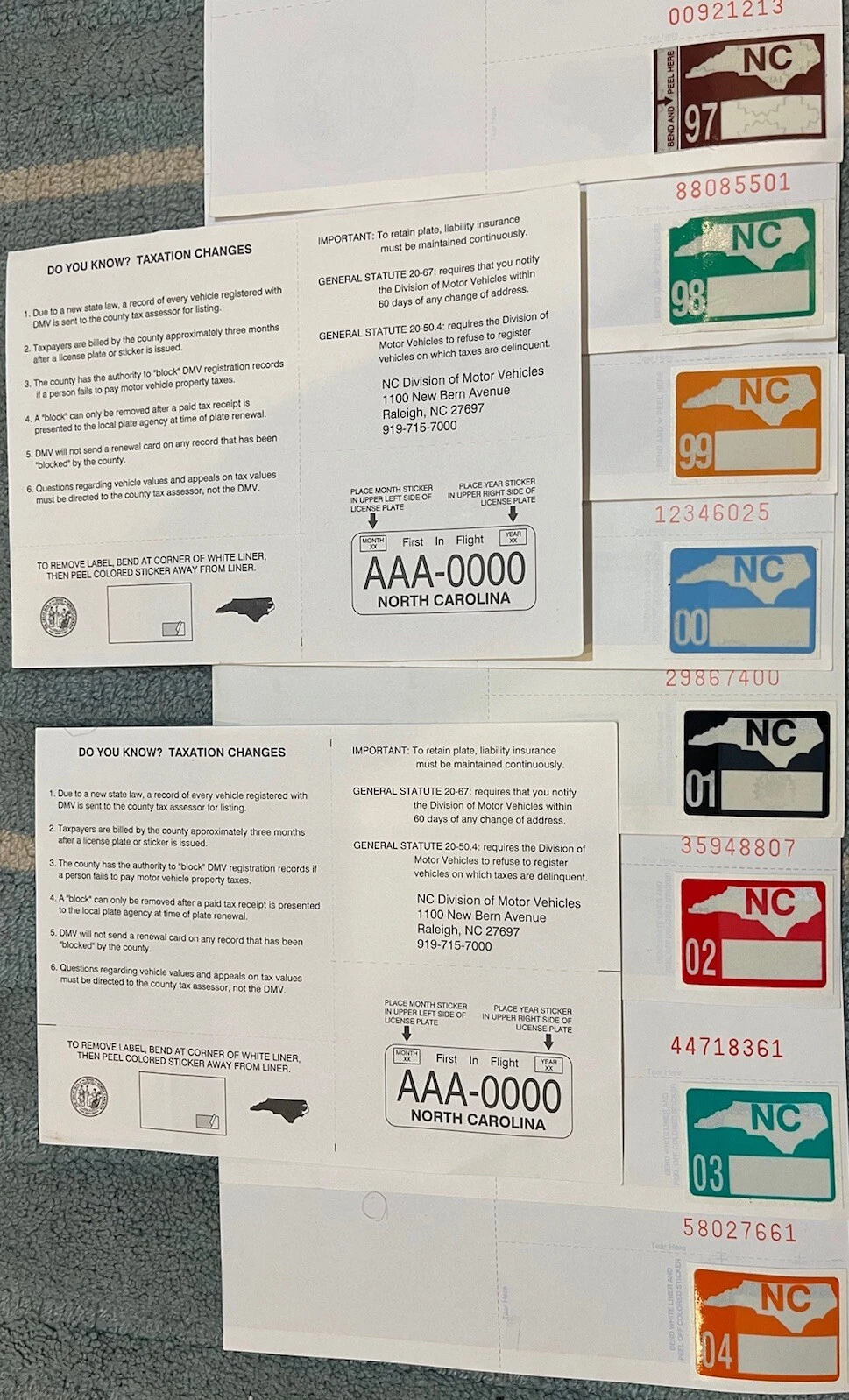
North Carolina drivers will no longer receive license plate renewal stickers or paper vehicle registration cards under a change tucked into the state's new $34.4 billion budget signed by Governor Josh Stein on July 7.
The North Carolina Division of Motor Vehicles is directed to transition to an all-electronic registration system by October 1, 2026. Under the new system, vehicle registration records will be maintained digitally and accessible online. Drivers will be able to pull up their proof of registration on their phone or print a copy at home.
“It'll be an electronic system. What exactly that looks like, we'll be developing that, but it will be somewhere online where you can access your proof of registration, and you could perhaps print that or just have it on your phone,” NC DMV Communications Manager Marty Homan told WFMY News 2.
Drivers who want a printed copy of their registration can request one through an online portal or in person at a DMV office, but will be required to pay a printing and mailing fee. The new law states the change is intended to “reduce administrative costs, streamline vehicle registration processes, and enhance efficiency.”
Importantly, the change does not eliminate annual registration renewal fees or vehicle inspections. Both remain required under state law. Only the physical sticker and paper card are going away — not the obligation to register and pay for your vehicle each year.
The DMV said the electronic registration system was not its own idea — the change was directed by the General Assembly and the agency is now working on how to implement it before the October 1 deadline. Homan noted the DMV is also seeking public input on how to best use 23 new examiner positions included in the budget, with options including extended hours or Saturday service.
North Carolina joins a growing number of states that have moved away from physical registration stickers in recent years, including Ohio, Iowa, and Oklahoma.