







Last Updated on September 22, 2026 8:14 am
A North Carolina state senator is renewing public attention on legislation that would cut the state’s mandatory divorce separation period roughly in half and eliminate a pair of centuries-old lawsuits tied to failed marriages.
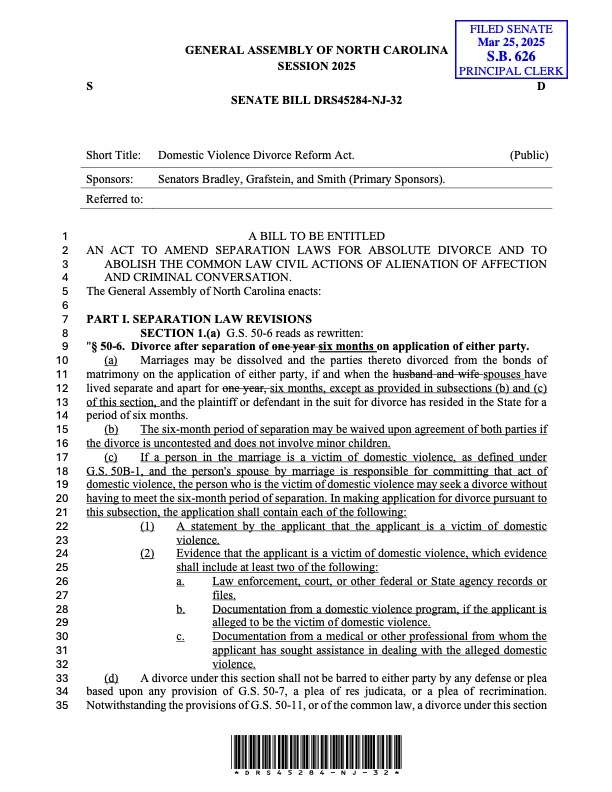
Senate Bill 626, the Domestic Violence Divorce Reform Act, would reduce North Carolina’s required separation period for an absolute divorce from one year and one day down to six months. Under the proposal, that waiting period could be waived entirely for uncontested divorces involving no minor children, and for domestic violence victims who can provide documented evidence of abuse, such as a protective order, police report, or medical record.
The bill would also abolish North Carolina’s alienation of affection and criminal conversation laws — so-called “heart balm” torts that allow a spouse to sue a third party accused of interfering in a marriage. North Carolina is one of only a handful of states that still permit such lawsuits, and courts here have awarded damages exceeding $8.8 million in a single case.
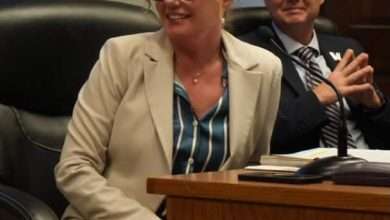
Sen. Woodson Bradley, a Democrat representing District 42 and one of the bill’s primary sponsors, told WCNC Charlotte that her own experience going through a years-long divorce shaped her support for the legislation. “I’m such a champion of freeing people from this just antiquated, old, ridiculous timeline,” Bradley told the station, adding that the prolonged process creates significant emotional and financial hardship — one reason, she said, that women in North Carolina often end up with unfair settlements or custody outcomes, because they can’t financially sustain a prolonged fight.
Bradley told WCNC the bill isn’t meant to encourage divorce, but to remove barriers for people in difficult or dangerous situations. “If somebody is trying to escape a domestic violence situation, North Carolina should not force that person to stay legally tied to an abuser because the calendar says they haven’t waited long enough,” she said.
The bill was filed March 25, 2025, and referred to the Senate Rules and Operations Committee the next day, where it has remained without a hearing, according to the North Carolina General Assembly’s bill tracking system. Bradley is joined by primary sponsors Lisa Grafstein and Kandie D. Smith, along with cosponsors Chitlik, Mayfield, Murdock, and Waddell. The bill would amend Chapters 50 and 52 of the North Carolina General Statutes, covering divorce and alienation of affection law. Supporters argue the current one-year requirement places unnecessary financial and emotional strain on people seeking to end a marriage, while critics contend the waiting period allows time for potential reconciliation and helps manage the volume of cases moving through the court system. Under current law, North Carolina’s one-year separation requirement and its alienation of affection and criminal conversation claims remain in force.