








Last Updated on July 14, 2026 4:13 pm
A bill that would end the twice-yearly ritual of changing clocks and make Daylight Saving Time permanent nationwide cleared a key procedural hurdle Tuesday, moving one step closer to a full vote in the U.S. House of Representatives.
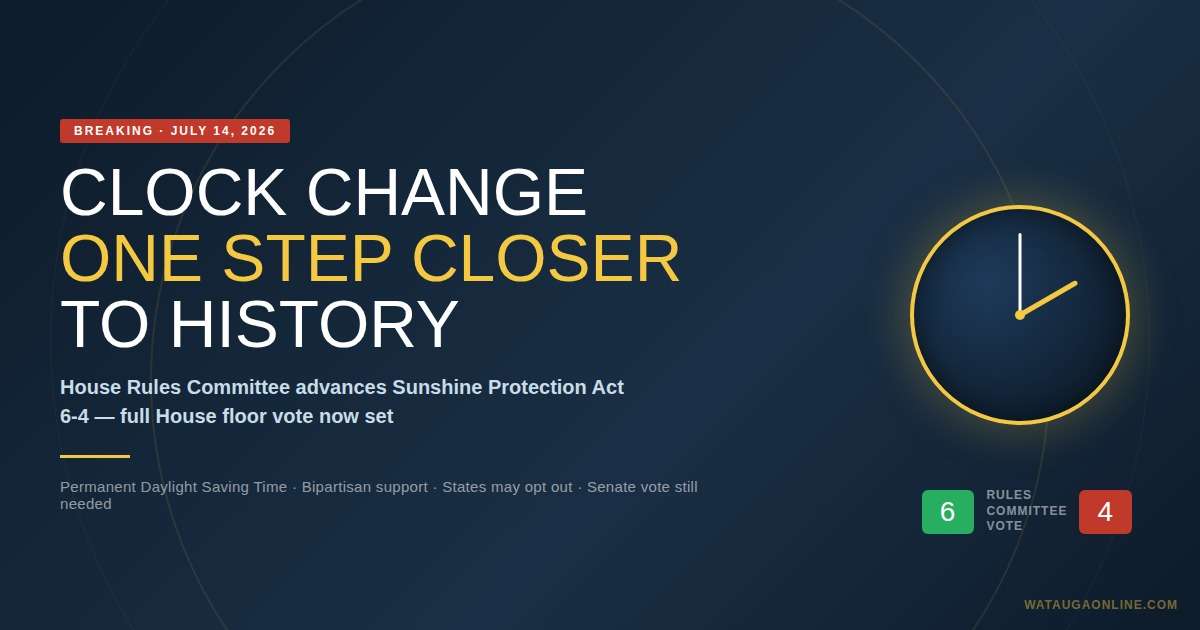
The House Rules Committee voted 6-4 on Tuesday, July 14, to advance the Sunshine Protection Act to the House floor. A full chamber vote could come as early as this week.
The bill, sponsored by Rep. Vern Buchanan, a Florida Republican, would make Daylight Saving Time the permanent standard time in the United States, eliminating the spring-forward and fall-back clock changes that most Americans have observed for decades. States would retain the option to opt out. Hawaii and most of Arizona already do not observe the current clock-change system.
The legislation has bipartisan support and the backing of President Donald Trump, who has repeatedly called for an end to the twice-yearly time change. After the bill passed the House Energy and Commerce Committee in May by an overwhelming 48-1 vote, Trump wrote on Truth Social that permanent Daylight Saving Time would be “a very nice WIN for the Republican Party” and called it “an easy one.”
House Rules Committee Chairman Brett Guthrie said Americans overwhelmingly support ending the clock change, arguing that locking the clock would give people more time for family, exercise, outdoor recreation, and business activity. Supporters of the bill also argue that eliminating the clock switch would improve sleep schedules, reduce traffic accidents, lower crime rates, and boost tourism and retail spending.
Not everyone agrees. Several medical organizations have argued that permanent standard time — not Daylight Saving Time — would be healthier, because morning sunlight more closely aligns with the body's natural circadian rhythms. Rep. Mary Gay Scanlon proposed an amendment to substitute standard time for Daylight Saving Time as the permanent option, but the amendment was rejected. Some conservative lawmakers also questioned the timing, with Rep. Keith Self arguing that Republican leadership should focus on border security and other priorities instead.
According to the National Conference of State Legislatures, 19 states have already passed laws that would allow for permanent Daylight Saving Time if Congress approves such a measure at the federal level.
This is not Congress's first attempt to end the clock change. The Senate passed a similar measure unanimously in March 2022, but it stalled in the House and never became law. Sen. Rick Scott attempted to fast-track the issue again in October 2025, but senators could not reach agreement.
If the Sunshine Protection Act passes the full House this week, it would still need to be taken up and approved by the Senate before heading to the President's desk for signature.