









Last Updated on August 31, 2026 2:19 pm
By Tyler Penland, contributor
A deep, partial lunar eclipse graced the skies over Western North Carolina overnight Thursday, August 27th into the early morning hours of Friday, August 28th, capping off a busy fall eclipse season that began with a total solar eclipse over Europe on August 12th.
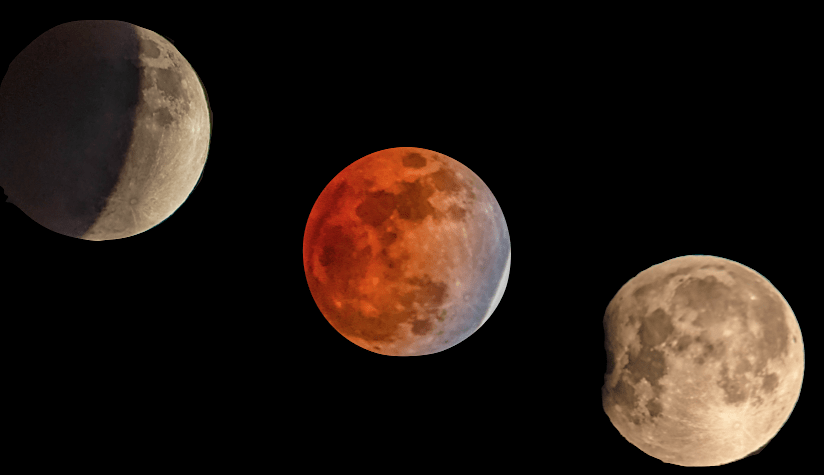
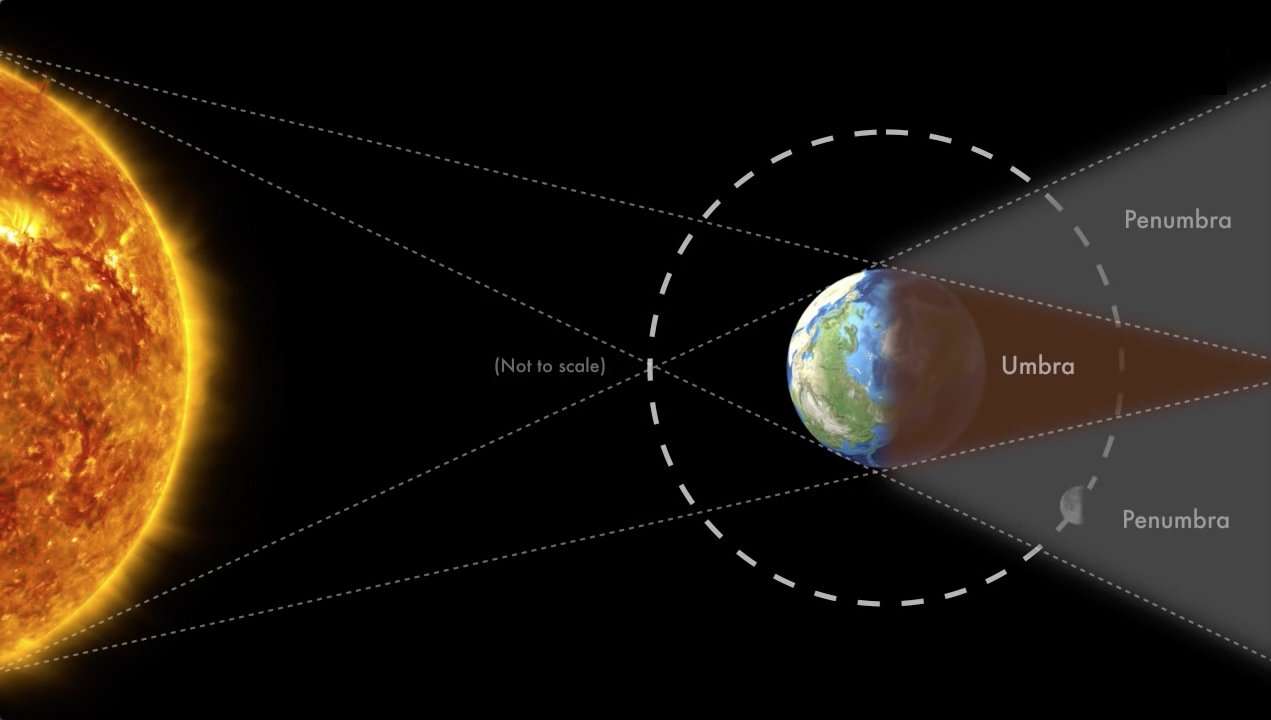
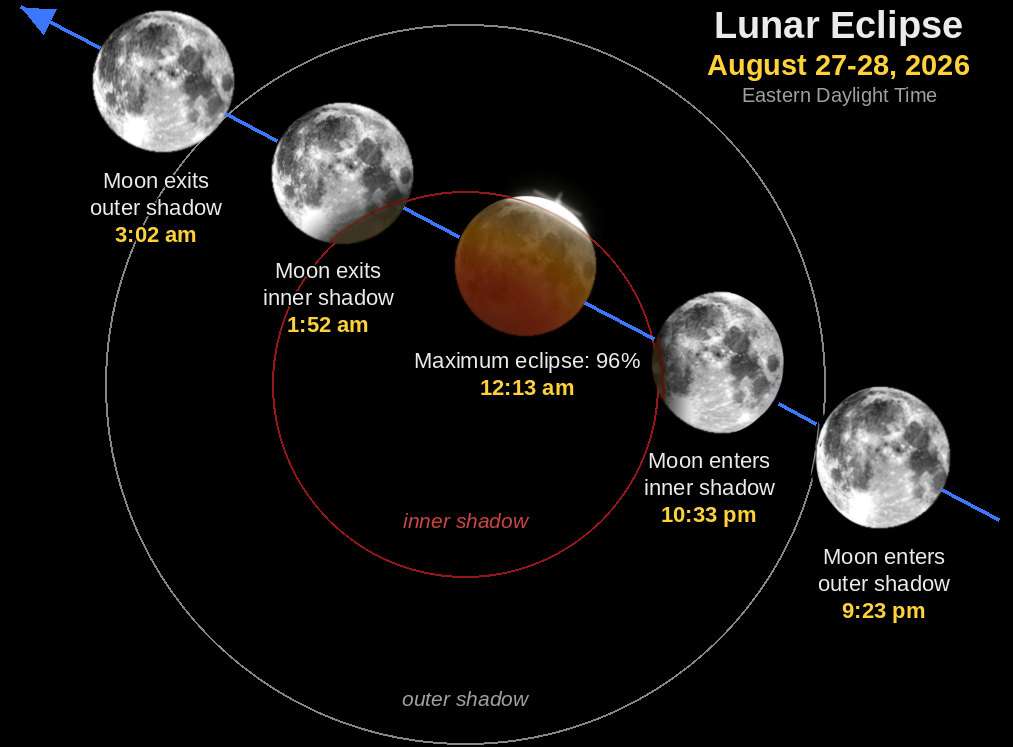
The eclipse was reminiscent of the deep, partial lunar eclipse of November 19, 2021, though it fell just short of reaching totality like the region’s last lunar eclipse on March 25, 2025. At maximum, around 12:13 a.m. Friday, roughly 96.3% of the lunar surface was covered by Earth’s umbra, with the remaining sliver deep in the lighter penumbra — producing a deep red, coppery moon with just a thin edge of silver light.
That reddish hue is caused by sunlight refracting through Earth’s atmosphere and still reaching the lunar surface — meaning anyone looking up was, in effect, viewing every sunrise and sunset happening around the world at that moment.
While the difference between a 99.9% and 100% solar eclipse is often described as night and day, the gap between a deep partial and total lunar eclipse is far more subtle — and still made for a striking sight, with the thin sliver of light creating a near “diamond ring” effect for those who caught it.
The eclipse officially began around 9:23 p.m. Thursday, though it wasn’t noticeable to the naked eye right away. The partial phase started at 10:33 p.m., reached maximum at 12:13 a.m. Friday, and ended at 1:51 a.m., with the moon fully clearing Earth’s shadow by 3:01 a.m. The shadow moved left to right across the lunar surface, with only the outer edge remaining in brighter sunlight throughout.
Cloud cover was a concern heading into the overnight hours, with widespread clouds forecast across the southeast. While a completely clear view was unlikely for most viewers, the moon’s high position in the sky meant it only took brief breaks in the clouds for skywatchers to catch a glimpse.