








Last Updated on September 8, 2026 5:00 pm
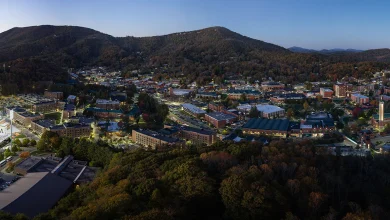
BOONE, N.C. — Appalachian State University opened its 2026–27 academic year with 21,308 Mountaineer students enrolled at the university for fall 2026 — including the largest online, graduate, transfer and first-generation student populations in the university’s history. A nearly 21% increase in online learners helped power App State’s fall 2026 enrollment, with these students now accounting for more than 18% of the overall student body.
The 2026 census at App State — calculated on the 10th day of classes — includes 19,178 undergraduate students, along with a record-setting 2,130 graduate students, reflecting a 3.1% increase in graduate enrollment over fall 2025 and marking the largest graduate student population at App State to date. App State also welcomed 3,492 new first-year students this semester and 1,619 new transfer students.
“The App State Experience delivers enormous value, equipping students with high-quality educational experiences that lead to successful careers while ensuring every single degree program yields a positive return on investment for resident students,” said App State Chancellor Heather Norris.
She continued, “App State’s mission remains steadfast: to broaden access to high-quality, cost-effective higher education and empower Mountaineer students to succeed, creating real value for our state, region and beyond.”
Record App State Online enrollment growth
Marking its seventh consecutive year of growth, App State Online achieved a university milestone this fall, with a record 3,883 enrolled students.
Through the university’s strategic partnership with Project Kitty Hawk (PKH), enrollment in PKH-supported App State Online: Flight Path degree programs has doubled year over year and now accounts for nearly a quarter of App State Online enrollment. This fall, 902 students are enrolled in the university’s six Flight Path programs.
“The remarkable rise in our online enrollment, including for those programs supported by App State’s partnership with Project Kitty Hawk, underscores our success in expanding access for working adults and adult learners,” Norris said. “These flexible, highly targeted programs ensure nontraditional students gain the knowledge and practical skills necessary to excel in high-demand fields across our state and region.”
App State offers undergraduate Flight Path programs in supply chain management, criminal justice, health care management, accounting, marketing, and organizational leadership and learning.
Expanding opportunities at App State Hickory
At the App State Hickory campus, 419 Mountaineer students are enrolled for fall 2026, including 245 first-generation students and 312 students from North Carolina counties classified as rural by the state’s Department of Commerce.
Under the leadership of Executive Vice Chancellor and Provost Neva J. Specht and her Academic Affairs team, App State continues to develop academic offerings and pathways at Hickory in areas that connect students with growing career fields and meet the region’s workforce needs. Recent additions include bachelor’s degrees in cybersecurity and health sciences, along with business programs in accounting, management, marketing, and supply chain management, which are also offered at the Boone campus.
App State is also creating more seamless pathways for students to continue their education at the university. A new statewide articulation agreement with nearly all of North Carolina’s community colleges provides students with health-related Associate in Applied Science (AAS) degrees a streamlined path to App State’s Bachelor of Science in Health Sciences, which can be completed in Boone, Hickory or online in as little as two years.
This fall, App State welcomed the first student cohort to its new hybrid Doctor of Nursing Practice program, designed to prepare family nurse practitioners and help address rural healthcare shortages. The program combines flexible online coursework with weeklong clinical immersions in the high-tech nursing simulation lab at Hickory. The simulation lab — along with modern classrooms and offices, student lounge and study areas, new computer, cybersecurity and science labs, and expanded space for the campus’s Interprofessional Clinic — was created as part of the campus’s second-floor renovation. App State has received continued legislative funding for the Hickory campus project, including $14.35 million in the latest state budget to support further facility renovations.
Opening more pathways to an App State education
This fall, 5,553 transfer students are enrolled at the university — the largest transfer student population in the school’s history. These students represent 29% of the undergraduate population.
Central to transfer student success at App State is the award-winning Aspire Appalachian Pathway Program, which provides a seamless pathway for students enrolled at partner community colleges to complete their degrees at App State. Qualifying students receive dedicated academic and financial aid advising assistance from both their community college and the university. App State has established new and renewed Aspire partnerships with 36 NC community colleges.
Additionally, a new statewide articulation agreement between App State and the North Carolina Community College System establishes a direct pathway for students holding health-related Associate in Applied Science (AAS) degrees to transfer into App State’s Bachelor of Science in health sciences program. More than 20,000 North Carolinians are currently enrolled in health-related Associate in Applied Science (AAS) programs, reflecting strong statewide demand for healthcare education, but AAS credits often do not fully transfer toward bachelor’s degrees. This first-of-its-kind initiative includes nearly all of the state’s community colleges, and the flexible, accelerated pathway can be completed online or in person in two years or less, preparing graduates for careers in management, public health and higher education.
Opening doors to college — supporting first-gen and rural students
First-generation student enrollment rose 10% over fall 2025 to a historic 7,249 students, who represent nearly 38% of undergraduates — the largest first-generation student population in university history. Recognized as one of only 60 institutions selected for the national FirstGen Forward Network, App State supports these students with specialized academic advising, mentoring, tutoring, financial literacy education and career development services.
“First-generation Mountaineer students are not only changing the economic mobility of their families for generations, they are also helping set high standards for resilience, adaptability and determination for their peers,” said Norris.
App State also enrolls 5,930 undergraduate students from rural North Carolina counties this fall — a 1.5% increase over fall 2025 — with these students representing 31% of App State’s population of in-state degree-seeking undergraduate students.
App State’s Office of Rural Promise is a critical component of the university’s ongoing efforts to foster regional connections and support growing programs that empower students and educators in North Carolina communities. The office leverages new and existing grant-supported programs to conduct research and design and implement services that positively impact rural students, families and educators, creating solutions for the challenges faced by rural communities.
These efforts generate lasting economic vitality across the region and state. More than 119,000 of App State’s living alumni, or 76%, reside in North Carolina, where they make impactful contributions to their respective communities. In fiscal year 2021–22, the increased earnings and productivity of App State alumni generated $140.7 million in added income for the regional economy (Watauga, Ashe, Avery, Caldwell, and Wilkes counties) and $1.9 billion statewide. Furthermore, 73,316 alumni, or 47% of App State’s more than 157,000 Mountaineer graduates, live and work in North Carolina’s Tier 1 and Tier 2 counties, directly supporting rural economic development.
Strong retention and graduation rates
App State’s dedication to student achievement is reflected in its strong performance metrics. The university’s overall 2026 first- to second-year retention rate stands at 83.4%, well above the national average of 77.9%. Meanwhile, the university’s four-year graduation rate rose to 60%, which is more than 70% above the national average.
“Our rising four-year graduation rate is a key indicator of both institutional effectiveness and student success,” Norris added. “We are wholly focused across all areas of the university on helping our students graduate on time so they can transition into the workforce faster and begin making meaningful contributions to their communities.”
All numbers reported reflect App State’s fall 2026 census data as of Aug. 28. The University of North Carolina System Office determines the census date to be the 10th day of each fall and spring semester.