







Last Updated on May 5, 2026 9:43 am
Tick-borne diseases are increasing across the High Country as spring gets underway, and residents in Ashe, Alleghany, and Watauga counties face significantly higher risk than the rest of North Carolina, according to AppHealthCare’s April 2026 Communicable Disease Update.
The report, which covers communicable disease trends in Ashe, Alleghany, and Watauga counties, highlights several areas of concern heading into warmer months.
TICK-BORNE DISEASES
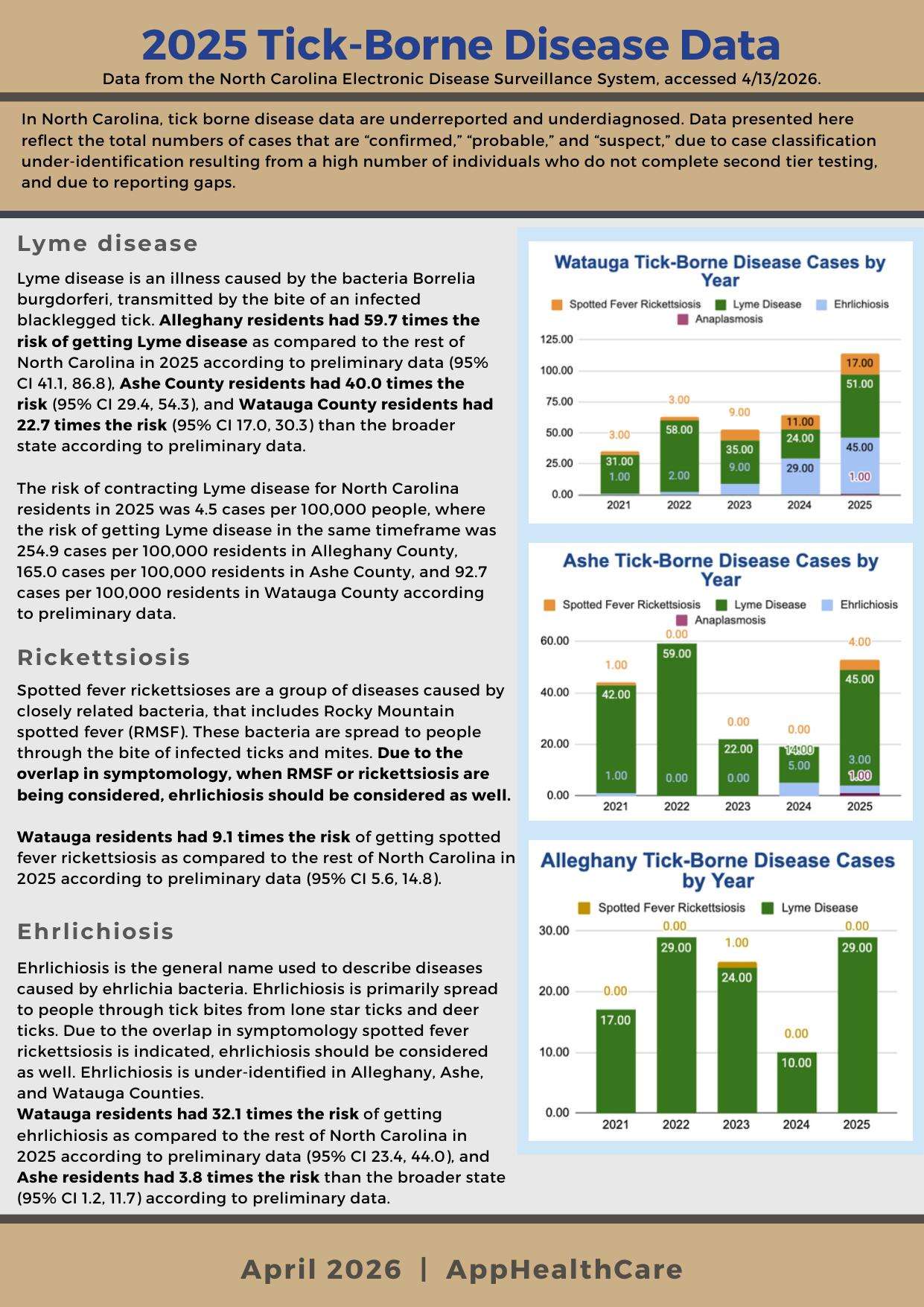
Lyme disease cases are among the most pressing concerns. According to preliminary 2025 data, Alleghany County residents had 59.7 times the risk of contracting Lyme disease compared to the rest of North Carolina, Ashe County residents had 40.0 times the risk, and Watauga County residents had 22.7 times the risk.
AppHealthCare notes that tick-borne disease data in North Carolina are underreported and underdiagnosed. Nymph ticks — which emerge in the spring and are roughly the size of a poppyseed — are among the primary vectors for disease transmission at this time of year.
Ehrlichiosis, a bacterial infection spread primarily through lone star and deer tick bites, is also a growing concern. Watauga County residents had 32.1 times the risk of contracting ehrlichiosis compared to the broader state in 2025, according to preliminary data. AppHealthCare says ehrlichiosis remains under-identified in the High Country and presents with symptoms similar to spotted fever rickettsiosis — commonly known as Rocky Mountain Spotted Fever. Watauga residents had 9.1 times the risk of spotted fever rickettsiosis compared to the rest of the state.
AppHealthCare recommends practicing tick safety and monitoring for symptoms after any tick bite. Seek medical care if symptoms develop.
FOOD AND WATERBORNE ILLNESS
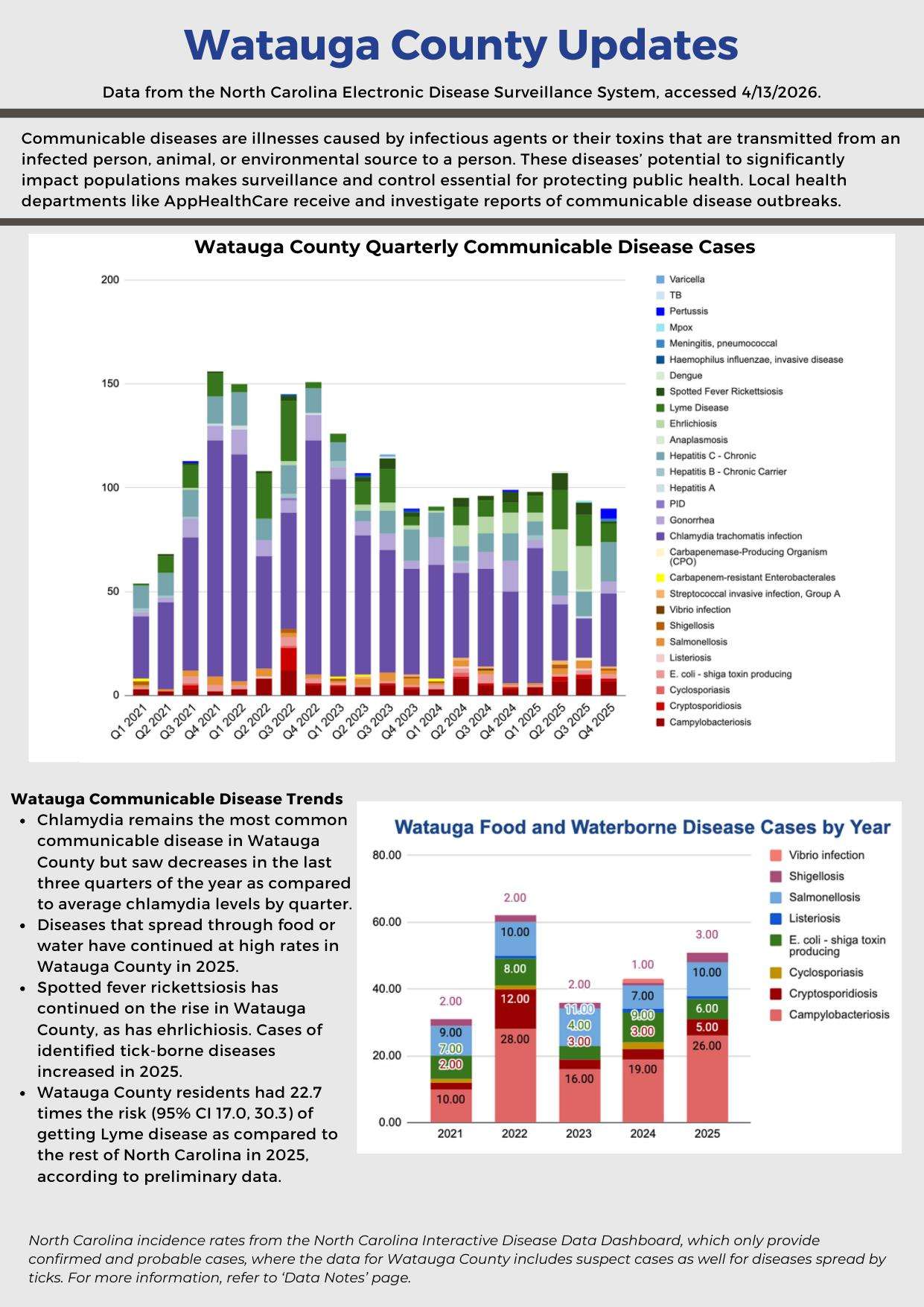
Food and waterborne diseases remain prevalent across the region at rates higher than the state average. Residents of Ashe and Watauga counties are at elevated risk for Campylobacteriosis compared to those elsewhere in North Carolina. AppHealthCare says these illnesses typically increase during the summer months.
RESPIRATORY VIRUSES
Statewide wastewater surveillance data from the NC Department of Health and Human Services shows COVID-19, influenza, and RSV activity levels are all currently at “Very Low” levels. Emergency department visits for respiratory illness stood at 5.3 percent of all visits in the most recent reporting week, a decrease from 6.0 percent the prior week.
MEASLES
AppHealthCare notes that measles case numbers were elevated across North Carolina through 2025. The only direct local impact was one individual in the tri-county area who was exposed to someone infectious with measles.
COMMUNICABLE DISEASE BURDEN
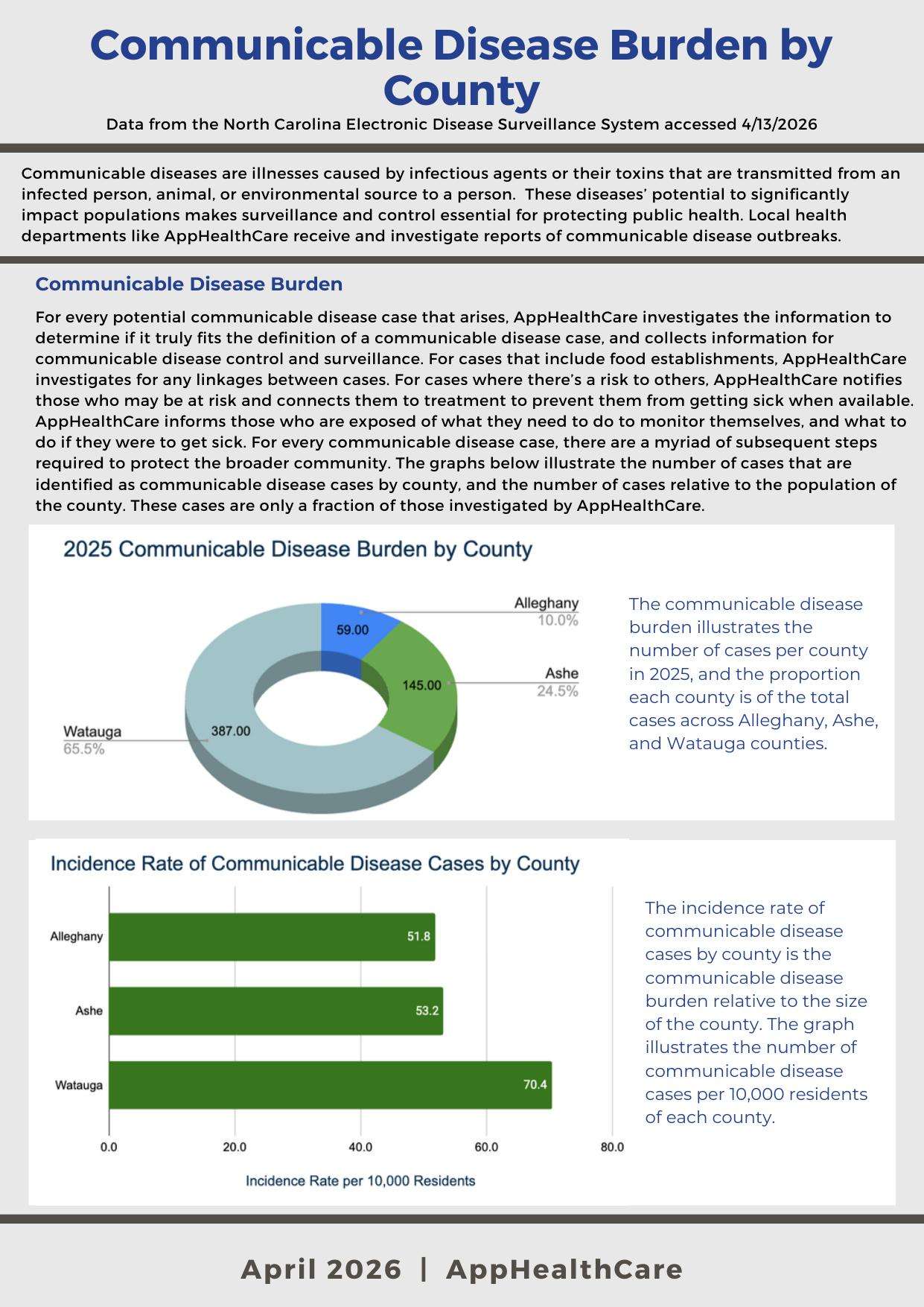
Watauga County accounted for 65.5 percent of the total communicable disease cases across the three-county AppHealthCare service area in 2025, with 387 cases. Ashe County had 145 cases (24.5 percent) and Alleghany County had 59 cases (10.0 percent). On a per-capita basis, Watauga County had an incidence rate of 70.4 cases per 10,000 residents, compared to 53.2 in Ashe County and 51.8 in Alleghany County.
AppHealthCare is available 24 hours a day, 7 days a week to receive reports of communicable diseases and public health urgent issues. Normal operating hours are Monday through Friday, 8 a.m. to 4:45 p.m., excluding holidays. For after-hours assistance, call the county office and follow the prompts to reach the after-hours service:
Alleghany County: (336) 372-5641
Ashe County: (336) 246-9449
Watauga County: (828) 264-4995
For general communicable disease questions, email preparedness@apphealth.com or call the AppHealthCare Call Center at (828) 795-1970.